


The Jakarta Post
August 28 2018
By Marchio Irfan Gorbiano
Members of business lobby group the Indonesian Chamber of Commerce and Industry (Kadin) have thrown their support behind President Joko “Jokowi” Widodo’s call for the expansion of biodiesel use in private services in an attempt to curb fuel imports, which have contributed to the current account deficit.
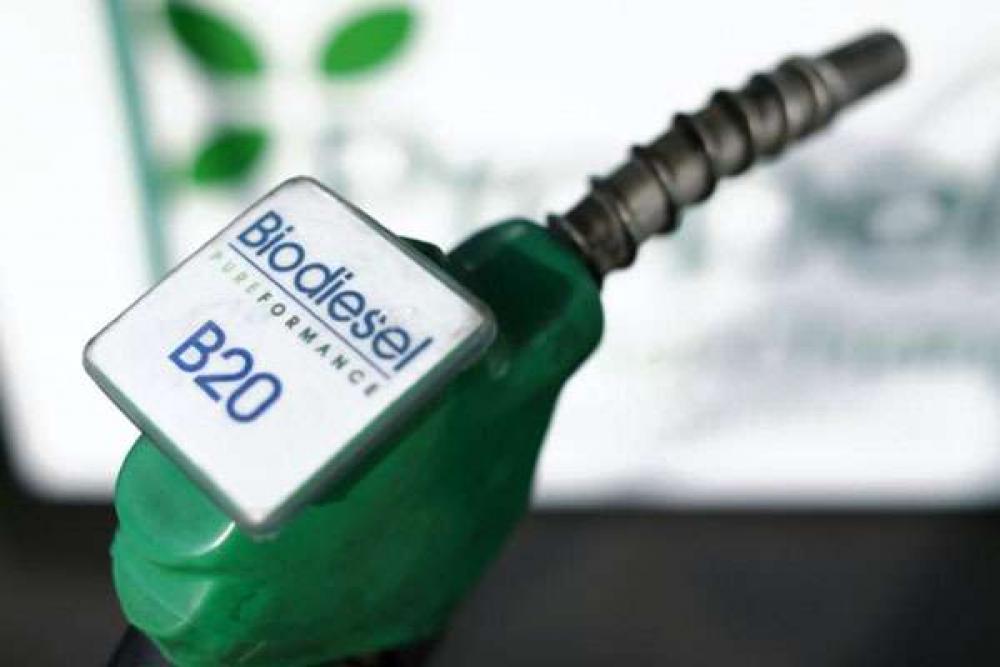
During a lunch on Monday at the State Palace, Jokowi discussed various topics with 26 Kadin members, including the government's policy to expand the use of 20 percent blended biodiesel (B20) to services outside the public services obligation (PSO).
Among attendants were Kadin chairman Rosan P. Roeslani, president director of publicly listed coal miner Adaro Energy Garibaldi "Boy" Thohir and director of diversified conglomerate Lippo Group John Riady.
"The government asked the private sector to commit to implementing it [the B20 expandsion policy]," said Rosan after the meeting in Jakarta. "Alhamdulilah [Thank God] Adaro immediately responded to this, and it will fully implement [the policy] on Sept 1."
Boy confirmed that the coal miner was ready to fully implement the government's policy starting in September.
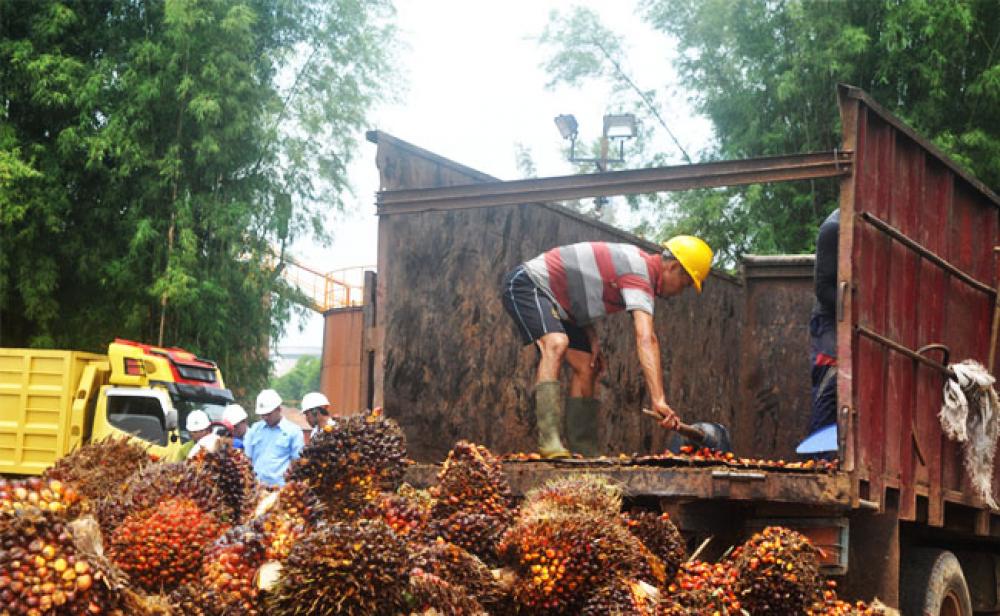
The government recently issued Presidential Regulation (Perpres) No. 66/2018, which serves as a legal basis to expand the use of B20 to non-PSO services, including heavy machinery operated by private sector firms and various kinds of transportation such as trains and ships.
The policy is a continuation of B20 use for PSO services under Solar, the diesel fuel brand produced by state energy giant Pertamina, since it was first implemented in 2016.
Coordinating Economic Minister Darmin Nasution previously said the B20 policy was expected to save some US$2.3 billion in foreign exchange from Sept. 1 until year-end.
By reducing fuel imports and replacing some of them with biodiesel the government aims to narrow the country's current account deficit, which widened to $8 billion in the second quarter from $5.7 billion a quarter earlier.
The deficit in the current account means the country is spending beyond its means, adding to currency vulnerabilities as it needs foreign capital to fulfill demand in the domestic foreign exchange market.
Aside from B20, Rosan said Jokowi also encouraged businesses to continue investing in the country despite external challenges, such as the tightening policy of the United States' Federal Reserve and escalated trade tensions between the US and China.
Rosan added that despite the external challenges, which are reflected in the ongoing depreciation of the rupiah against the US dollar, the government and the private sector must show unity and intensify communications regarding efforts to improve Indonesia's economy.
The government is pulling out all the stops to stabilize the rupiah. Aside from the B20 policy, the government is planning to curb imports by implementing and additional tax on imported consumer goods while also pushing the development of import-substitution industries.
The rupiah so far has weakened around 7 percent year-to-date, according to Bank Indonesia (BI) data.
On Monday, the rupiah traded at Rp14,610 per US dollar, slightly stronger than Rp14,655 per US dollar seen on Friday, data from Jakarta Interbank Spot Dollar Rate (JISDOR) show.
The central bank stressed that the upcoming presidential election campaign season, which will start on Sept. 23 and end on April 13,2019, would not interfere with its independence in setting its monetary policy.
BI deputy governor Dody Budi Waluyo recently said the central bank was independent and its future policy action would be data dependent.
"All this time, we have taken the election factor into account in formulating our monetary policy," said Dody as quoted by Bloomberg adding that there remained room to increase the policy rate as a result of ongoing global pressures.
BI has raised its key rate four times since May to a total of 125 basis points to bring tis policy rate - the seven - day reverse repo rate - to 5.5 percent.